
What Does IP67 and IP68 Mean on a Phone and Does It Matter in Singapore?
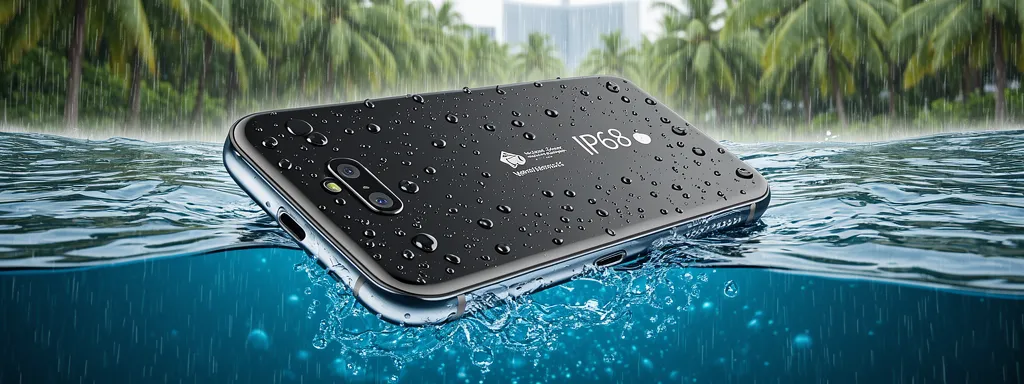
In Singapore’s tropical climate — sudden heavy rain, humid MRT stations, and poolside weekends — your phone’s water resistance rating matters more than almost anywhere else. But IP ratings are widely misunderstood. This guide explains exactly what IP67 and IP68 mean, what they cover, and critically, what they don’t.
What Does IP Rating Mean?
IP stands for Ingress Protection — a standard defined by the International Electrotechnical Commission (IEC 60529) that measures how well a device is sealed against solid particles (dust) and liquids (water). Every IP rating has two digits:
| Digit | What It Measures | Scale |
|---|---|---|
| First digit (e.g. IP67) | Dust/solid protection | 0–6 (6 = fully dust-tight) |
| Second digit (e.g. IP67) | Water protection | 0–9 (higher = better) |
IP67 vs IP68 — What’s the Actual Difference?
| IP67 | IP68 | |
|---|---|---|
| Dust protection | ✅ Fully dust-tight | ✅ Fully dust-tight |
| Water depth | Up to 1 metre | Up to 1.5–6 metres* |
| Duration | Up to 30 minutes | Up to 30 minutes |
| Covers rain? | ✅ Yes | ✅ Yes |
| Found in | Mid-range phones (Samsung A-series, older iPhones) | Flagship phones (iPhone 15, Samsung S24, Pixel 9) |
*IP68 depth varies by manufacturer — Apple rates iPhone 15 Pro at 6m, Samsung S24 at 2m.
What IP Ratings Do NOT Cover — Critical to Know
This is the part most people miss. IP ratings are laboratory test results under controlled conditions — not real-world guarantees. Here’s what IP ratings do NOT protect against:
| Not Covered By IP Rating | Why |
|---|---|
| Saltwater (sea, sweat) | Salt corrodes seals over time — tested with fresh water only |
| Chlorinated water (pool) | Chemicals degrade seals faster than fresh water |
| High-pressure water (shower jet) | IP tests use static pressure, not jets |
| Seal degradation over time | IP rating is tested on new device only — seals weaken with age and drops |
| Warranty claims for water damage | Manufacturers explicitly exclude water damage from warranty even on IP68 phones |
Does IP Rating Matter in Singapore?
Yes — more than most other countries. Here’s why IP rating is particularly relevant for Singapore users:
| Singapore Situation | IP Rating Relevance |
|---|---|
| Sudden heavy tropical rain | IP67+ provides real protection from being caught in a downpour |
| High humidity year-round | IP-rated phones resist humidity-related internal corrosion better |
| Hawker centre / food spills | IP protection helps with accidental liquid spills |
| Beach & pool activities | Helpful for splashes but don’t submerge in saltwater or pool |
Frequently Asked Questions
Is IP68 really waterproof?
Not truly waterproof — water resistant is more accurate. IP68 means the phone survived a controlled lab test at a specific depth and duration. Real-world water exposure involves variables (pressure, temperature, seal condition, chemicals) that the test doesn’t replicate.
Can I use my IP68 phone in the Singapore rain?
Yes — rain is well within the protection range of IP67 and IP68. Even IP67 phones handle Singapore’s heavy tropical rain without issues. Just avoid submerging in seawater, pool water, or directing shower jets at the phone.
Does IP rating decrease over time?
Yes. The rubber seals that create water resistance degrade over time, especially after drops, screen repairs, and exposure to heat (very relevant in Singapore). A 2-year-old phone’s actual water resistance is typically less than its rated IP68 specification.
Does IP rating affect the repair cost after water damage?
No. Water damage repair costs the same regardless of IP rating. Warranty doesn’t cover water damage. If your phone gets water damaged beyond its IP rating’s protection, you’ll pay out of pocket for repairs — typically $150–$400 in Singapore depending on the model and damage extent.
Is IP67 good enough or should I insist on IP68?
For most Singapore users, IP67 is sufficient. The practical difference between IP67 (1m/30min) and IP68 (1.5–6m/30min) is minimal in everyday life. Unless you regularly submerge your phone, don’t let the IP rating be the deciding factor over other features.
🔗 Useful Official Resources